 a brand of Hongkong Starlink Group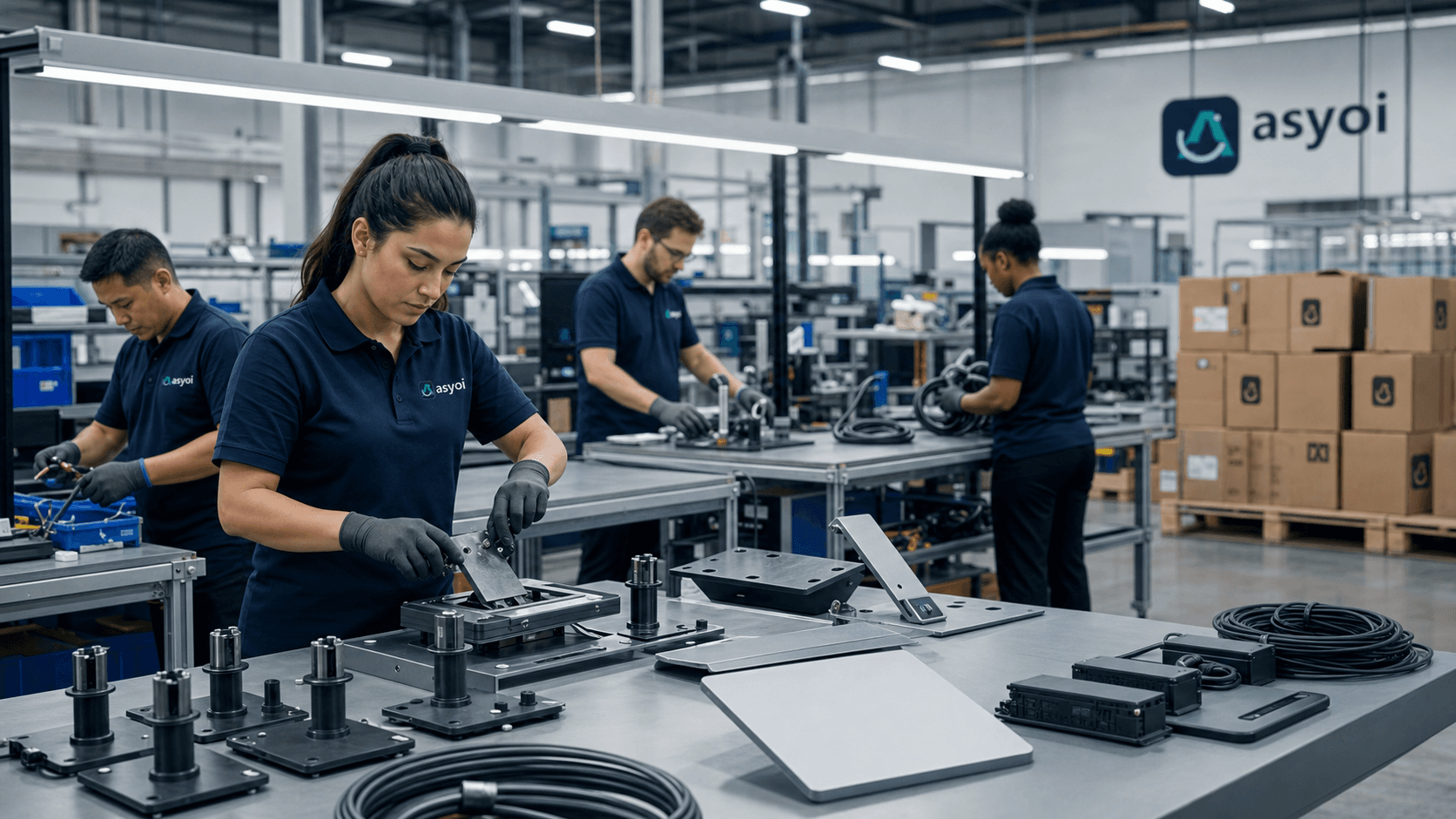
Choosing a Starlink accessories manufacturer is a risk-management decision, not only a price comparison. The supplier must understand fast-changing terminal generations, produce consistent hardware, communicate limitations clearly and deliver cartons that a distributor can receive, identify and sell without avoidable rework.
For importers, installers, telecom solution providers and private-label brands, the true cost of a supplier includes sample revisions, compatibility errors, quality variation, packaging damage, delayed documentation and after-sales handling. A quotation that is several percent lower can become more expensive when these costs appear after shipment.
This guide explains how to evaluate an OEM/ODM supplier for mounts, cables, power solutions, cases and setup kits. It is written as a due-diligence framework. No single certificate or factory photograph proves capability; evidence should match the exact product and order.
Quick answer: Start with product-family competence, then verify engineering communication, sample control, test methods, production consistency, traceability, packaging and export execution. Approve a pilot order before scaling. Keep every compatibility claim tied to a named terminal model.
Define the sourcing project before contacting factories
A supplier cannot quote accurately from “send your best Starlink products.” Prepare a short request for quotation that states:
- Buyer type and target sales channel.
- Destination countries.
- Starlink terminal families.
- Product categories and estimated annual volume.
- Initial sample and pilot quantities.
- Required materials, finish or performance conditions.
- Branding, barcode, manual and packaging requirements.
- Compliance documents required by the market or channel.
- Target date and shipping terms.
- Whether the design is supplier-standard, modified or fully custom.
This information also helps compare quotations. When two suppliers quote different materials, packaging and inspection levels, the prices are not equivalent.
1. Evaluate model-specific product knowledge
The supplier should distinguish Mini, V5, Standard 4/4X, Gen 2 and Performance Gen 3 rather than describing every item as universal. Ask the sales or engineering contact to explain the intended terminal, installation interface and known limitations of the proposed product.
Good answers are specific and cautious. For example, a magnetic vehicle mount should state the required surface type. A cable proposal should identify both connections and the power or data function. A case should state which terminal and included components fit its insert. A factory that promises universal compatibility without questions creates a high return risk.
Ask what physical reference, gauge or terminal is used during development and inspection. For new hardware such as V5, confirm the tested revision and market kit rather than accepting an updated product title as proof.
2. Separate OEM from ODM capability
OEM and ODM are often used loosely. Clarify what work the supplier will actually perform.
OEM support may include applying the buyer's logo, changing color, creating packaging, adjusting a cable length or producing an existing design under private label.
ODM support may include requirements analysis, industrial design, mechanical structure, electronics development, prototype iterations, design-for-manufacture review, tooling and validation.
Ask who owns drawings and tooling, how engineering changes are approved and what information will be supplied after development. A custom project should have version-controlled specifications. A sample approved verbally through chat photographs is not enough for repeatable mass production.
3. Review the sample-development process
A credible sample process includes requirement confirmation, a quoted specification, sample identification, buyer feedback and a final approved version. Keep an approval record containing photographs, dimensions, materials, color, included hardware, packaging and functional observations.
For mounts, inspect terminal fit, fastener access, coating, welds, edge condition, load path and cable clearance. For cables and power products, confirm connectors, polarity, voltage conditions, length and functional behavior. For cases, check component fit, retention, compression points, handle and latch operation. For setup kits, verify every included piece and the installation sequence.
Where customer requirements are incomplete, the supplier should ask questions rather than silently choose a cheaper construction.
4. Ask for a product-specific quality plan
“We have strict QC” is not a quality plan. Request the control points used for the proposed SKU. They may include incoming-material verification, first-piece approval, in-process dimensional checks, electrical testing, appearance inspection, assembly checks and final sampling.
The plan should identify acceptance criteria and records. Not every product needs the same test. A metal bracket, molded connector and textile carrying case have different failure modes.
Mount and bracket checks
- Critical interface dimensions.
- Material and thickness where specified.
- Weld or joint appearance.
- Coating coverage, color and surface defects.
- Thread quality and hardware count.
- Assembly and terminal fit sampling.
- Packaging protection between metal components.
Cable and power-product checks
- Connector and conductor identification.
- Length and overmold dimensions.
- Continuity and polarity.
- Functional sampling under stated input/output conditions.
- Visual inspection for molding defects and exposed conductors.
- Label accuracy and protective caps.
Case and bag checks
- External and internal dimensions.
- Material, stitching and zipper or latch operation.
- Insert geometry and component fit.
- Handle attachment and repeated-use sampling.
- Odor, contamination and appearance checks.
- Carton compression and internal protection.
Test claims should have context. A single maximum-load number does not describe the fixture, direction, duration or safety factor. An ingress-protection claim must specify the tested assembly and condition. Ask for a report when a claim is important to purchasing or regulatory communication.
Mid-article CTA: request an auditable quotation
Send Your Requirements: Provide model, product category, target quantity, country, customization and inspection expectations. Asyoi can prepare a structured quotation and sample plan. Start a B2B inquiry.
5. Verify production consistency, not only the showroom
Factory visits and videos are useful, but buyers should follow the product flow. Where are incoming materials stored? How are approved samples displayed? How are work instructions controlled? How are mixed models separated? What happens to nonconforming products?
If a supplier uses specialized partner processes—such as coating, injection molding or PCB assembly—ask how those processes are approved and inspected. Outsourcing a process is not automatically negative; lack of control is the issue.
For repeat orders, define which changes require buyer approval. A substitute fastener, connector, foam material or packaging component can affect installation even if the product still looks similar.
6. Examine traceability and change control
At minimum, purchase orders, production lots and inspection records should be linkable. Product labels or cartons should identify SKU and quantity. For electronic or safety-related products, stronger traceability may be appropriate.
Ask how the supplier handles engineering changes. A written change notice should describe the reason, affected part, implementation date and whether new validation is required. Fast-moving accessory markets tempt suppliers to update products quickly; controlled updates protect both parties.
7. Evaluate packaging as part of the product
Packaging affects damage rate, warehouse efficiency and customer trust. Review it during sample approval rather than after production.
Check individual protection, hardware bags, carton strength, labeling, barcode readability, manual language and master-carton quantity. For e-commerce, consider drop and handling risk. For pallet shipments, consider carton dimensions, stacking and moisture exposure. For mixed-SKU containers, require clear outer identification.
Private-label buyers should provide brand artwork in controlled files and approve a print proof. Confirm trademark responsibilities and avoid unlicensed marks on products or packaging.
8. Plan pre-shipment inspection
Pre-shipment inspection should occur after production and packing are substantially complete. The inspection scope can include quantity, workmanship, dimensions, function, accessories, packaging, labels and carton marks.
Use a sampling plan appropriate to the order and risk. High-risk functions may require 100% testing even when appearance uses sampling. Define defect classes before inspection so a cosmetic mark and a wrong connector are not treated the same.
Photographs are helpful but should supplement, not replace, recorded results. If an issue is found, document containment, rework and reinspection before release.
9. Check export and communication capability
A capable export supplier should understand commercial invoices, packing lists, carton data and shipment coordination. Documentation requirements vary by destination and product, so ask what the supplier can provide for the specific SKU rather than requesting “all certificates.”
Communication quality matters throughout development. Evaluate response accuracy, not only response speed. The best contact is willing to say “we need to verify” and returns with evidence. Keep major decisions in written specifications and approvals.
10. Compare total landed risk
Build a sourcing scorecard rather than awarding the order to the lowest unit price. Suggested categories include:
| Category | Suggested weight |
|---|---|
| Product and compatibility competence | 20% |
| Sample quality and engineering response | 20% |
| Quality plan and test evidence | 20% |
| Production and change control | 15% |
| Packaging and documentation | 10% |
| Delivery and export execution | 10% |
| Commercial terms | 5% |
Adjust weights for the project. A safety-sensitive power product deserves greater technical weight; a simple storage bag may place more emphasis on workmanship and packaging.
Red flags during supplier selection
- Every product is described as universal.
- The quotation omits material or important configuration details.
- Test numbers are provided without method or condition.
- The supplier will not identify the approved sample version.
- Customization is promised without discussing tooling, MOQ or schedule.
- Product photographs and shipped samples differ materially.
- Certificates cannot be connected to the product or applicant.
- Packaging is postponed until after mass production.
- Changes are made without written approval.
- The supplier resists independent or buyer-arranged inspection.
FAQ
What is the difference between an OEM and ODM Starlink accessories supplier?
OEM usually means producing or branding an existing design to an agreed specification. ODM includes more design and development responsibility. Actual service scope matters more than the label, so define deliverables, ownership and approval stages.
What MOQ should a B2B buyer expect?
MOQ depends on the process, customization and packaging. Standard products with neutral packaging may support lower quantities. Custom colors, molded parts, electronics and printed packaging usually increase economic batch size. Ask for separate sample, pilot and mass-order quantities.
How can I verify a manufacturer's compatibility claims?
Request the named terminal model and revision, test setup, photographs or records, then test samples in your own intended system. Keep the approved compatibility statement in the purchase specification.
Which documents should an importer request?
Requirements depend on product and destination. Common commercial documents include invoice, packing list and shipping data. Technical or compliance documents must be evaluated for the exact SKU and market; a generic certificate folder is not sufficient.
Should I use third-party pre-shipment inspection?
It can be valuable for new suppliers, large orders, mixed-SKU shipments or high-risk products. Agree on specification, sampling and defect classification before the inspection.
How many samples are needed before mass production?
Use enough samples to evaluate fit, function, packaging and relevant variation. A single perfect sample may not represent production consistency. A pilot order is often the best bridge between prototypes and volume.
Conclusion
The right Starlink accessories manufacturer provides controlled evidence from requirement to shipment. Model-specific knowledge, sample discipline, product-appropriate testing, change control and clear packaging protect the buyer's margin and reputation. Use a written scorecard, approve a pilot order and scale only after the supplier demonstrates repeatability.
Final CTA
Discuss an OEM/ODM Project: Send your target products, market, forecast quantity, branding requirements and delivery plan. Asyoi can respond with questions, a sample route and quotation framework. Contact Us.